
UK Property vs UAE Property: Why Investors Don’t Have to Choose
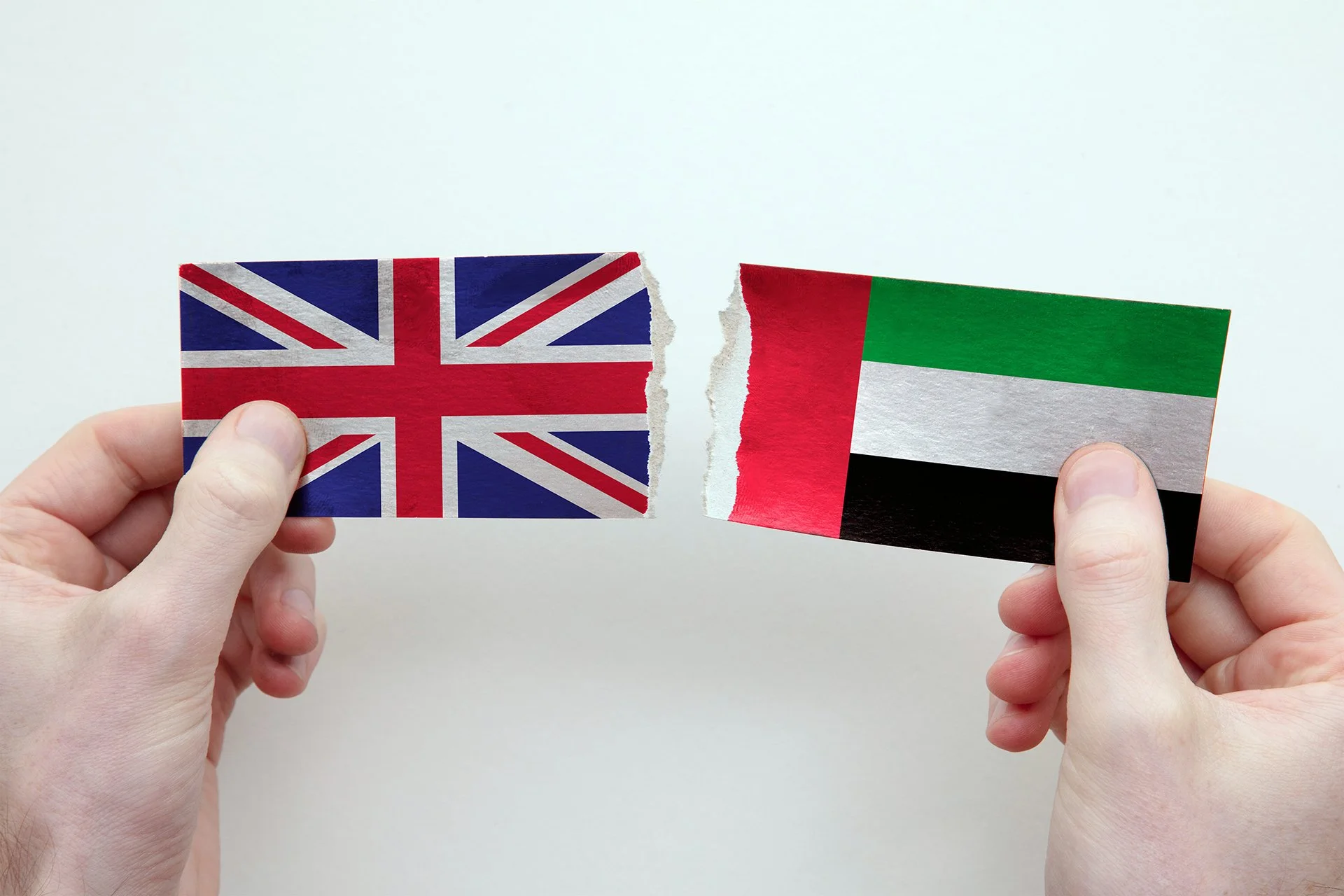
Ask whether UK property or UAE property is the better investment and you will usually receive a confident answer.
Dubai investors will point to population growth, international migration, a favourable tax environment and the extraordinary transformation of the city's property market. Advocates of the UK will highlight its mature market, established legal system, chronic housing demand and the long history of international capital flowing into British property. Both can make convincing arguments.
But the question itself is flawed.
For an investor based in the Middle East, UK property and UAE property do not necessarily need to compete for the same role within a portfolio. They are different markets, operating at different stages of their cycles, denominated in different currencies and influenced by different economic forces.
Those differences are precisely what can make owning both attractive.
The UAE has created one of the most exciting property investment stories in the world. Britain, meanwhile, offers access to an established international market where selected opportunities can provide income, geographic diversification and exposure to long-term housing demand.
For investors who have already accumulated significant wealth in Dubai, Abu Dhabi or elsewhere in the Gulf, the question should therefore be less about choosing a winner and more about building a portfolio capable of benefiting from both.
The UAE Property Story Is Difficult to Ignore.
Dubai's transformation has been remarkable.
The emirate has successfully attracted businesses, entrepreneurs, professionals and wealthy individuals from around the world. Population growth has supported housing demand, while the UAE's position as a business and financial centre has continued to strengthen.
Property has been one of the clearest beneficiaries.
Investors who entered the right areas at the right stages of the market have experienced substantial capital appreciation, while strong rental demand has created attractive income opportunities across numerous segments.
This success is not accidental. Dubai has deliberately positioned itself as a destination for international capital through infrastructure investment, connectivity, business-friendly policies and an environment designed to attract globally mobile people and companies.
For investors living in the UAE, there is also a significant practical advantage: familiarity.
They can visit developments, understand neighbourhoods, observe infrastructure being built and experience changes in demand first-hand. That local knowledge should not be underestimated.
There is therefore no compelling reason for an investor to abandon UAE property simply because they are considering opportunities overseas.
The stronger question is what happens when UAE property already represents a significant proportion of their wealth.
Success Can Create Concentration.
Diversification often becomes most relevant after an investment strategy has worked.
Consider someone who moved to Dubai several years ago, established a successful business and subsequently acquired multiple properties. Their company operates within the UAE economy, their income is generated there, their home is there and a substantial proportion of their investment portfolio is now also located there.
They may be extremely successful, but their financial exposure has become increasingly concentrated.
This is not simply about property prices falling. Geographic concentration means multiple components of wealth can potentially be influenced by the same economic or geopolitical event.
The regional conflict in 2026 has made that point considerably more immediate for Middle Eastern investors. Disruption to aviation, shipping, energy markets and trade routes has demonstrated how quickly geopolitical events can affect economic activity beyond the countries directly involved.
The UAE has shown considerable resilience through that uncertainty. That is an argument for the strength of the country, but it does not eliminate the principle of diversification.
Holding assets in another jurisdiction introduces a different set of economic drivers and risks.
That can be valuable even when the market at home remains strong.
The UK and UAE Are at Different Stages of Their Property Cycles.
One of the strongest arguments for owning property across multiple countries is that markets rarely move together.
Dubai has experienced substantial growth as international demand, population expansion and investment flows have supported property values. Britain has travelled through a very different period, with higher borrowing costs and weaker sentiment creating pressure across parts of its housing market.
Neither cycle will continue indefinitely.
That is not a prediction of a UK boom or Dubai correction. Property cycles are influenced by too many variables for simplistic forecasts to be useful.
It does, however, mean the two markets can offer investors very different entry conditions.
In a rapidly appreciating market, investors must increasingly scrutinise how much future growth is already reflected in today's price. In a market that has experienced slower activity or repricing, the challenge is different: identifying where weaker sentiment has created genuine value rather than simply exposing fundamentally weak assets.
This is why comparing average house-price growth between the UAE and UK can be misleading.
An investor does not buy an average.
They buy a specific property, at a specific price, in a specific location, for a specific purpose.
The quality of that decision matters considerably more than which country happened to top a property index during the previous twelve months.
Dubai Can Offer Growth. The UK Can Add Something Different.
There is a temptation to judge every property investment according to the same criteria.
If Dubai has delivered stronger recent capital appreciation, why allocate money elsewhere?
Because maximising the return from every individual investment is not necessarily the same as building the strongest overall portfolio.
An investor might hold UAE property because they want exposure to Dubai's continued population and economic growth. A UK investment may be selected because it offers rental income, sterling exposure and access to an entirely different property market.
One asset may be more growth-oriented. Another may be selected primarily for income and diversification.
There is no contradiction.
Professional investors routinely allocate capital across assets with different characteristics because they understand that no investment environment remains dominant forever.
Private investors can apply the same principle.
The objective is not to make every asset behave identically. It is often preferable that they do not.
The Tax Conversation Needs More Nuance.
One area where the UAE has an obvious attraction is taxation.
The country's tax environment has long been part of its appeal to international investors and entrepreneurs. The UK property market, by comparison, has acquisition taxes and ongoing tax considerations that overseas investors need to understand before committing capital.
Viewed in isolation, that makes the UAE appear significantly more attractive.
But investments should not be assessed on taxation alone.
An investment producing a poor underlying return does not become attractive because its tax treatment is favourable. Equally, an investment capable of generating an attractive net return should not automatically be dismissed because taxation is higher.
What matters is what the investor retains after all relevant costs, taxes and fees, considered alongside the risk being taken.
For Middle Eastern investors considering UK property, professional tax advice is therefore essential. The structure of ownership, investor circumstances and type of investment can all affect the eventual position.
Stable Rise does not replace specialist tax advice, nor should an investment provider attempt to do so.
The important point is that investors compare opportunities on a realistic net basis rather than headline returns.
Income Should Be Compared Properly.
Rental yield is another area where comparisons can become misleading.
An advertised gross yield tells an investor relatively little without understanding service charges, management fees, maintenance, vacancy assumptions, financing costs and other expenses.
This applies equally in Dubai and Britain.
The property offering the highest headline yield is not automatically the strongest investment. High yields can sometimes reflect greater risk, weaker capital demand or locations where future resale may be more difficult.
Regional UK markets can offer attractive income characteristics compared with certain parts of London. As explored in our previous article, cities such as Manchester, Birmingham, Liverpool and Leeds are increasingly attracting international investors looking for opportunities supported by employment, universities, regeneration and housing demand.
Dubai offers its own range of income opportunities across a very different property landscape.
The correct comparison therefore isn't "What is the average yield in Britain versus Dubai?"
It is "What is the realistic net return from these two specific opportunities, and what risks am I taking to achieve it?"
That is a much more useful investment question.
Currency Makes the Two Markets Even More Different.
A UAE-based investor allocating capital into British property is also making a currency decision.
The dirham's peg to the US dollar means investors operating primarily in the UAE are already closely connected to the dollar. Purchasing a UK asset introduces sterling exposure.
That can affect returns positively or negatively.
If sterling strengthens against the dollar over the investment period, the value of a UK asset may increase when converted back into dirhams, independently of what happens to the underlying property price. If sterling weakens, the reverse can occur.
Currency is therefore a risk that needs to be understood.
But it can also contribute to diversification.
An investor whose businesses, cash and properties are all effectively concentrated around the same currency relationship may deliberately choose to hold part of their wealth in assets denominated elsewhere.
For some Middle Eastern families, there can also be practical reasons to hold sterling. Education costs, UK homes, family commitments and business interests can all create future liabilities in pounds.
In those circumstances, sterling assets may serve a wider financial purpose.
The UK Offers a Different Type of Market Maturity.
The UK property market is old, heavily regulated and extremely well documented.
For investors, that can occasionally mean more bureaucracy. But it also means operating within an established framework of property ownership, legal rights, conveyancing, valuation and professional services.
International investors have been participating in the market for generations.
This familiarity is particularly important for Middle Eastern investors. Britain and the Gulf have deep commercial, educational and personal relationships, and the conclusion of the UK-GCC free trade agreement in 2026 further strengthens the economic connection between the two regions.
The UAE has developed its own increasingly sophisticated regulatory and property framework, particularly in Dubai and Abu Dhabi.
Again, the point is not that one system is universally superior.
It is that an investor holding assets in both jurisdictions is spreading wealth across two established but fundamentally different environments.
Shariah-Compliant Investors Can Diversify Too.
For some Middle Eastern investors, conventional comparisons between UK and UAE property overlook an essential requirement.
The investment structure must comply with Islamic principles.
There can be an assumption that international diversification inevitably makes this more difficult. Britain, however, has developed one of the most significant Islamic finance ecosystems outside the Muslim world.
This means investors looking beyond the Gulf can access opportunities structured around Shariah-compliant principles rather than having to choose between international diversification and their investment requirements.
Stable Rise provides access to Shariah-compliant UK investment opportunities alongside conventional options, giving investors greater flexibility when considering how international assets could fit within their portfolio.
For a Gulf investor already holding Shariah-compliant investments in the region, this creates the possibility of diversifying geographically while maintaining the principles governing how their capital is invested.
What Could a Portfolio Containing Both Actually Achieve?
The strongest argument for owning UK and UAE property becomes clearer when we stop comparing individual returns and consider the portfolio as a whole.
UAE property could provide exposure to one of the world's most dynamic growth markets, supported by international migration, business expansion and continued investment into the country's development.
UK property could provide exposure to an established market driven by different economic forces, potentially generating income while adding geographic and currency diversification.
The two assets do not need to rise at exactly the same time.
In fact, there can be advantages when they do not.
If one market experiences a period of slower growth while another performs strongly, the portfolio becomes less dependent on the fortunes of either individual country.
That does not remove risk. Diversification never does.
It distributes it.
And for investors building substantial long-term wealth, that can be far more important than attempting to identify next year's best-performing property market.
Diversification Is Not About Fear.
The current geopolitical environment makes it easy to frame international diversification as a defensive response to uncertainty in the Middle East.
That would be a mistake.
Investors should not diversify because they believe something bad is inevitably going to happen. They should diversify because the future is inherently uncertain everywhere.
Britain has its own economic and political risks. So does Europe. So does the United States. Every investment market does.
The purpose of diversification is to recognise that reality.
The regional war has simply made geographic concentration more visible. An investor whose entire financial life is connected to one location can suddenly see how an external event might influence several areas of their wealth at once.
The rational response is not panic.
It is portfolio construction.
Stop Asking Which Market Wins.
Dubai does not need to fail for UK property to succeed.
Britain does not need to outperform the UAE for a UK investment to deserve a place within a Middle Eastern investor's portfolio.
This is perhaps the most important distinction.
Investment marketing often encourages people to search for the next winning market. But long-term wealth is rarely built by repeatedly moving everything into whichever country performed best last year.
It is built through selection, patience and diversification.
For many Middle Eastern investors, UAE property deserves to remain an important part of that strategy. The economic transformation taking place across the region provides compelling reasons to retain exposure.
UK property can serve another purpose.
It can introduce another currency, another economic cycle, another legal jurisdiction and another source of potential income and capital growth.
That is not an argument for Britain instead of the UAE.
It is an argument for thinking internationally about wealth.
And for investors fortunate enough to have access to opportunities in both markets, choosing only one may be the least interesting option of all.
Key Takeaway
UK and UAE property should not automatically be viewed as competing investments. They operate within different economic cycles, currencies and market environments and can therefore perform different roles within the same portfolio. For Middle Eastern investors who already have substantial exposure to the Gulf, carefully selected UK property can add geographic and currency diversification while retaining exposure to income and long-term capital growth. The objective is not to identify a winner. It is to build a stronger portfolio.
Why Choose One Market When You Can Build Across Both?
If you've already built property wealth in Dubai, Abu Dhabi or elsewhere in the Middle East, investing internationally does not mean abandoning the market that helped create it.
Stable Rise helps UAE, GCC and international investors access carefully selected UK investment opportunities, including property, alternative investments and options structured around Shariah-compliant principles.
Our focus is on helping investors understand what UK exposure could add to their existing portfolio rather than simply selling another investment.
Register your interest today and speak with Stable Rise about building a more internationally diversified investment portfolio. →