
Why Middle Eastern Investors Are Looking at the UK Again
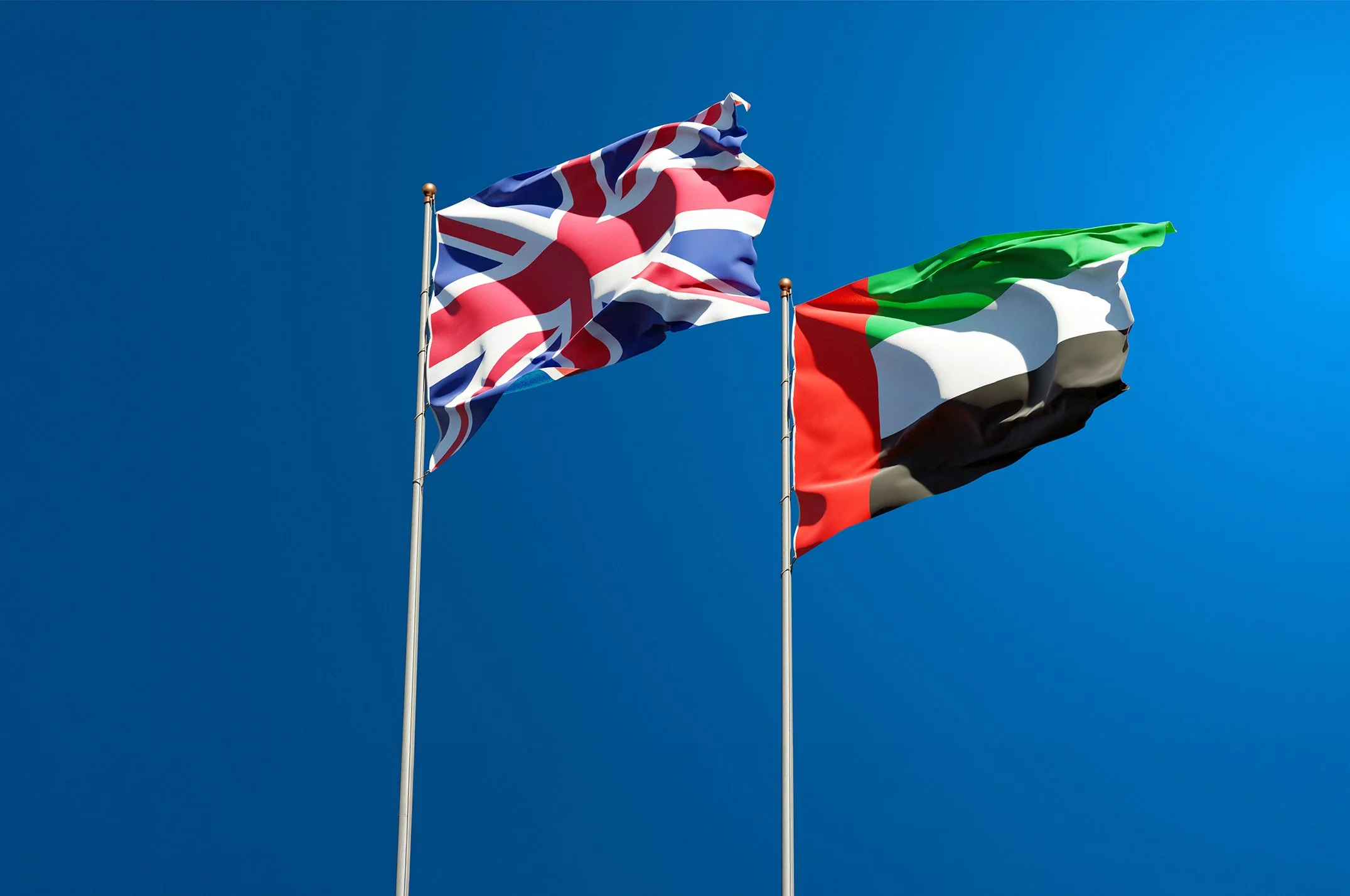
For investors across the Middle East, there has rarely been a shortage of opportunities close to home.
Dubai and Abu Dhabi have established themselves as major destinations for international wealth, Saudi Arabia is undergoing an extraordinary programme of economic transformation, and significant investment continues to flow throughout the GCC. Against that backdrop, it would be reasonable to ask why an investor based in the UAE, Saudi Arabia, Qatar or Kuwait should be looking thousands of miles away at the United Kingdom.
Increasingly, however, that is exactly what many are doing.
Interest in UK assets from Middle Eastern investors is rising again, and this time the motivation extends well beyond the traditional attraction of owning prime London property. Investors are looking at diversification, income, relative value, currency exposure and the security of holding assets within one of the world's most established investment markets.
The UK has never disappeared from the radar of Gulf investors, but its position within international portfolios is changing. After several years in which Brexit, political uncertainty, inflation and rising interest rates dominated the conversation, investors are beginning to look beyond the headlines and reassess what the market actually offers.
For some, that means returning to London. For others, it means looking beyond the capital altogether at opportunities in cities such as Manchester, Birmingham, Liverpool, Leeds and elsewhere. The common thread is not geography. It is the search for quality assets capable of complementing the considerable wealth already being created in the Middle East.
The Relationship Between Middle Eastern Capital and the UK Is Nothing New.
The connection between Gulf capital and Britain has been built over decades. Middle Eastern sovereign wealth funds, family offices, institutions and private investors have acquired everything from residential and commercial property to hotels, infrastructure and major stakes in British companies.
London has traditionally occupied a particularly important position. Its combination of global connectivity, education, finance, culture and property ownership made it a natural destination for internationally mobile Middle Eastern wealth. For many families, a UK investment was never purely financial; it could also support education, business interests, family requirements and long-term wealth planning.
That familiarity matters. Investors tend to favour markets they understand, particularly when allocating substantial amounts of capital internationally. The UK's legal system, established property rights and relatively transparent investment environment have helped create a level of confidence that has been built over generations rather than years.
What is changing is the breadth of that interest. The conversation is no longer simply about whether a Gulf investor should own an apartment in Mayfair or Knightsbridge. Increasingly, investors are considering what role UK assets can play within a wider international portfolio and where the strongest opportunities may exist outside the locations traditionally associated with overseas wealth.
Diversification Is Becoming More Important.
The Middle East has produced some exceptional investment returns in recent years, particularly within property. Dubai has demonstrated just how powerful the combination of population growth, international migration, business-friendly policies and constrained supply can become.
Strong domestic performance, however, does not remove the case for international diversification. In many respects, it strengthens it.
An investor whose business interests, property portfolio, income and personal wealth are predominantly concentrated within one region has significant exposure to the same economic environment. Even when that environment is performing exceptionally well, spreading capital across different markets can reduce reliance on a single economic cycle.
The UK provides Middle Eastern investors with exposure to a very different market. It has a different currency, different economic drivers, different property cycles and a mature investment framework. That does not make it inherently better or safer than investing within the GCC. It makes it different, and that difference is precisely what diversification is intended to achieve.
This distinction is important. Investing in Britain does not have to mean choosing Britain instead of Dubai, Abu Dhabi or Riyadh. For many investors, the more compelling question is whether UK assets could sit alongside Middle Eastern investments and strengthen the portfolio as a whole.
That is a considerably more sophisticated investment conversation than attempting to identify one country as the winner.
Relative Value Is Bringing the UK Back Into Focus.
Price matters in every investment.
A market can have outstanding fundamentals and still produce disappointing returns if investors pay too much to enter it. Equally, a market experiencing negative sentiment can create attractive opportunities if quality assets become available at valuations that properly compensate investors for the risks involved.
This is where perceptions of the UK are beginning to change.
Several years of political and economic uncertainty have weighed heavily on sentiment. Higher interest rates have affected borrowing, transaction volumes have slowed in parts of the property market, and investors have become far more selective about what they are prepared to buy.
Those conditions have created challenges, but they have also created repricing.
For investors holding dollar-linked currencies, including the UAE dirham and several other GCC currencies, exchange rates can further influence the relative cost of acquiring sterling-denominated assets. Currency should never be the sole reason for making an investment, but it can materially alter the entry point for an international buyer.
This combination of adjusted valuations and currency considerations has encouraged investors to take another look at opportunities that may previously have appeared expensive. The important point is not that UK assets are simply "cheap". Cheap assets can remain cheap for very good reasons. The opportunity lies in identifying quality investments where the current valuation appears attractive relative to the long-term fundamentals.
That requires selectivity rather than simply buying into a country because sentiment has changed.
UK Property Means More Than London.
For decades, international property investment in Britain was almost synonymous with London. That association remains powerful, and London will continue to attract substantial international capital. But it represents only one part of a much larger market.
Middle Eastern investors are increasingly exploring regional UK cities where entry prices can be lower and rental yields may be stronger. Manchester and Liverpool have attracted particular interest, while Birmingham, Leeds and other major cities continue to benefit from regeneration, employment growth, universities and substantial tenant populations.
This shift matters because the investment case outside London can be fundamentally different. Rather than purchasing primarily for prestige or long-term capital preservation, regional investments may place greater emphasis on rental income, local housing demand and regeneration-led growth.
The strongest opportunities are not determined simply by finding the city with the highest advertised yield. Location within the city, local supply, tenant demand, development quality, transport connections and the experience of the developer all remain critical.
A headline return is only meaningful if the assumptions behind it are realistic.
For an overseas investor who may not know the individual streets, neighbourhoods and local dynamics of a British city, proper due diligence becomes particularly important. This is where access to carefully selected opportunities and experienced UK partners can make a meaningful difference.
The Search for Income Is Changing Investment Decisions.
Another factor encouraging investors to reassess the UK is the renewed importance of income.
During the era of exceptionally cheap capital, many investment decisions were dominated by capital growth. Rising asset values could compensate for relatively modest income, encouraging investors to focus heavily on what an investment might eventually be worth.
Higher interest rates have changed that calculation. Investors now have more alternatives for generating returns, which means assets carrying additional risk must justify why they deserve capital.
For property investors, rental income therefore matters more. For private investments, the quality and visibility of projected returns matter more. Across the market, investors are paying closer attention to cash flow rather than relying entirely on future appreciation.
This environment can favour investments supported by genuine demand. A residential development in an area with an identifiable housing requirement has an economic purpose beyond its resale value. The same principle applies to many other real assets: their investment case is supported by the underlying use of the asset rather than market sentiment alone.
For Middle Eastern investors accustomed to rapidly appreciating property markets, the UK may therefore fulfil a different role. The objective may be less about replicating Dubai-style growth and more about combining income, diversification and longer-term capital appreciation within an established market.
Stability Has Value in an Uncertain World.
The word "stability" can be overused in investment marketing. No country, market or asset is completely stable, and the UK has certainly experienced its share of political and economic uncertainty.
Yet there is a difference between short-term political uncertainty and the institutional framework within which investments are held.
For international investors, enforceable contracts, transparent ownership structures, established courts and clear property rights have considerable value. They become particularly important when capital is being invested across borders and may remain invested for many years.
This helps explain why the UK has continued attracting global capital despite periods of disappointing economic headlines. Investors are not assessing the country solely according to quarterly GDP growth or the latest political development. They are also assessing the environment in which their capital will be held.
The UK's investment market is deep, internationally connected and familiar to institutions around the world. That does not eliminate investment risk, but it provides an established framework within which that risk can be assessed.
For investors seeking to build wealth across several jurisdictions, that framework can be an important part of the decision.
UK-Gulf Economic Ties Are Becoming Stronger.
The investment relationship is also developing within a much broader economic context. The UK and Gulf states already have substantial commercial relationships spanning energy, technology, financial services, infrastructure, property and many other sectors.
Those connections are continuing to deepen, reinforcing the flow of people, businesses and capital between the two regions.
For investors, stronger economic relationships can create familiarity. British businesses increasingly look towards the Gulf for growth and investment, while Middle Eastern investors continue to view Britain as a destination for capital, education, property and commercial interests.
This two-way relationship matters because investment rarely exists in isolation. Capital tends to follow established commercial networks, professional relationships and markets investors already understand.
The UK and the Gulf have spent decades developing those connections. The next phase may see them become even more significant.
Not Every UK Investment Is a Good Investment.
Renewed interest in Britain should not be confused with an argument for investing indiscriminately.
There are excellent UK investments and poor UK investments. There are strong developers and weak developers, attractive locations and oversupplied locations, realistic projections and optimistic ones. The same applies to every investment market in the world.
International investors should therefore look beyond the headline return.
Who is behind the opportunity? What is their track record? What supports the projected return? What is the underlying demand for the asset? How is the investment structured? What are the principal risks? What is the anticipated investment period, and how is capital ultimately expected to be returned?
Those questions become particularly important when investing from overseas.
The objective should not simply be to gain exposure to the UK. It should be to gain exposure to carefully selected UK opportunities where the potential return is appropriate for the risk being taken.
That difference is fundamental to the Stable Rise approach.
Why Now?
There is rarely a perfect moment to invest.
If investors wait until every economic indicator is positive, political uncertainty has disappeared and markets are universally optimistic, they will often discover that valuations have already responded.
Opportunity frequently emerges earlier, while sentiment remains mixed.
The UK today sits in an interesting position. It has been through a prolonged period of uncertainty, asset values have adjusted in several areas, investors have become more selective and international capital is beginning to look again at opportunities that may have been overlooked.
At the same time, the Middle East is creating wealth at extraordinary speed. Entrepreneurs, executives, family offices and private investors across the region are increasingly international in how they think about capital.
For those investors, the UK does not need to replace the opportunities available closer to home.
It needs to complement them.
That may ultimately be the most compelling reason Middle Eastern investors are looking at Britain again.
Key Takeaway
The renewed interest in the UK from Middle Eastern investors is about more than property prices or exchange rates. It reflects a broader desire to diversify wealth across markets, currencies and economic cycles while gaining exposure to an established international investment destination. The opportunity is not simply to "buy Britain", but to identify carefully selected UK investments capable of adding something different to an already successful Middle Eastern portfolio.
Explore UK Investment Opportunities with Stable Rise.
If you're based in the UAE, Saudi Arabia or elsewhere in the Middle East and are considering diversifying into the UK, Stable Rise can help you explore carefully selected investment opportunities aligned with your objectives.
We work with established UK partners to provide access to opportunities across property and alternative investments, including options for investors seeking Shariah-compliant investment structures.
Whether your priority is income, long-term growth, diversification or establishing greater exposure to UK assets, our team can help you understand the opportunities currently available.
Register your interest today and speak with Stable Rise about investing in the UK. →